

Porto welcomed us with a heat wave, while the gardens of Palácio de Cristal greeted us with peacocks, hens and roosters. This was the setting for Graphene Week 2026, Europe’s leading event for 2D materials, organised by the Graphene Flagship.
Last week, from 21 to 25 September 2026, six GRAPHERGIA partners joined 448 delegates from 40 countries to discuss graphene and other 2D materials in over 100 oral presentations and 180 posters in the Super Bock Arena.
More specifically, we delivered an oral presentation in a session on flexible, printed and wearable electronics; showcased three posters, two of which received awards; co-organised a workshop with the ARMS project on graphene technologies for smart textiles, wearable electronics and supercapacitors; and pitched our demo cases.
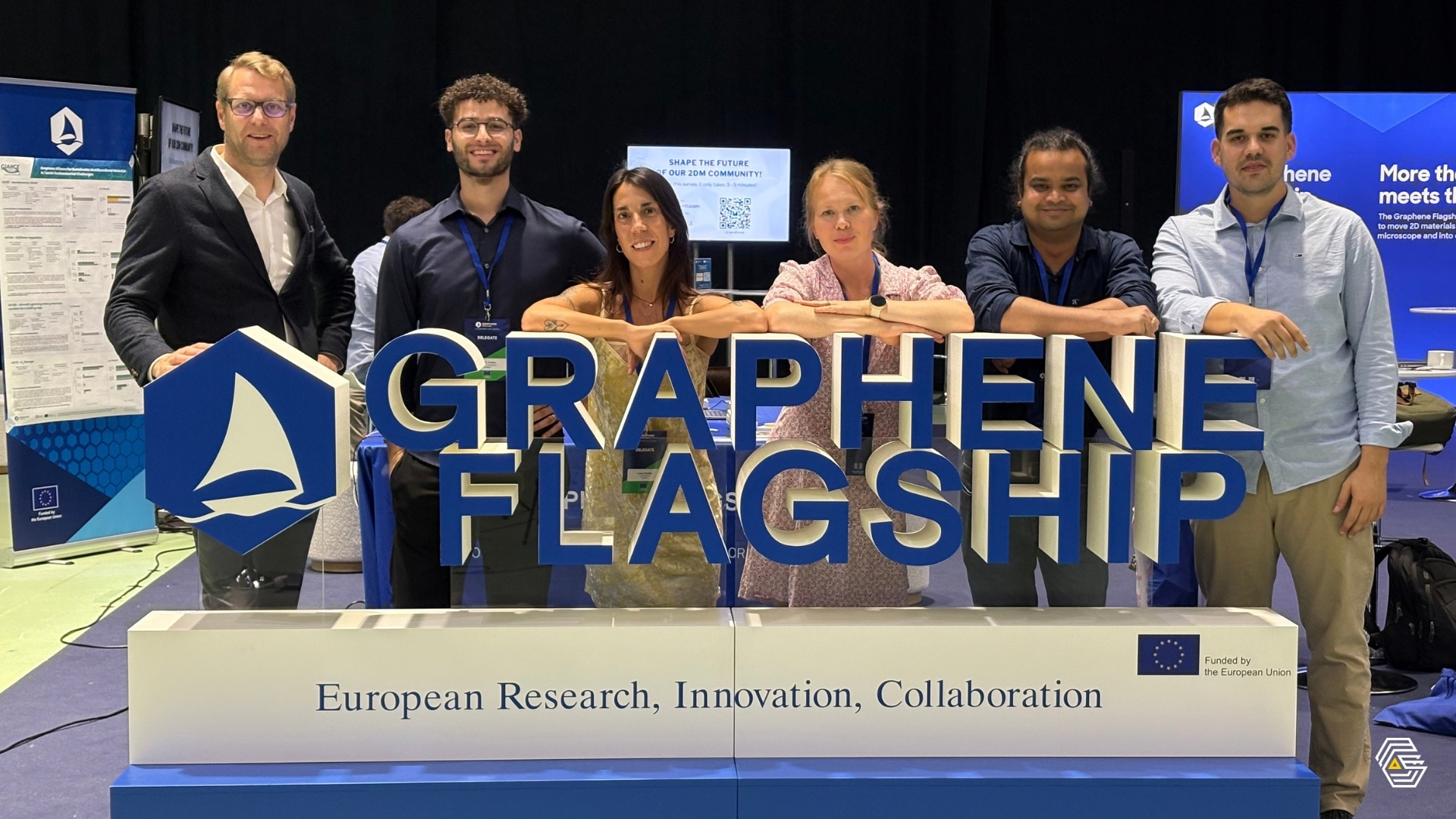
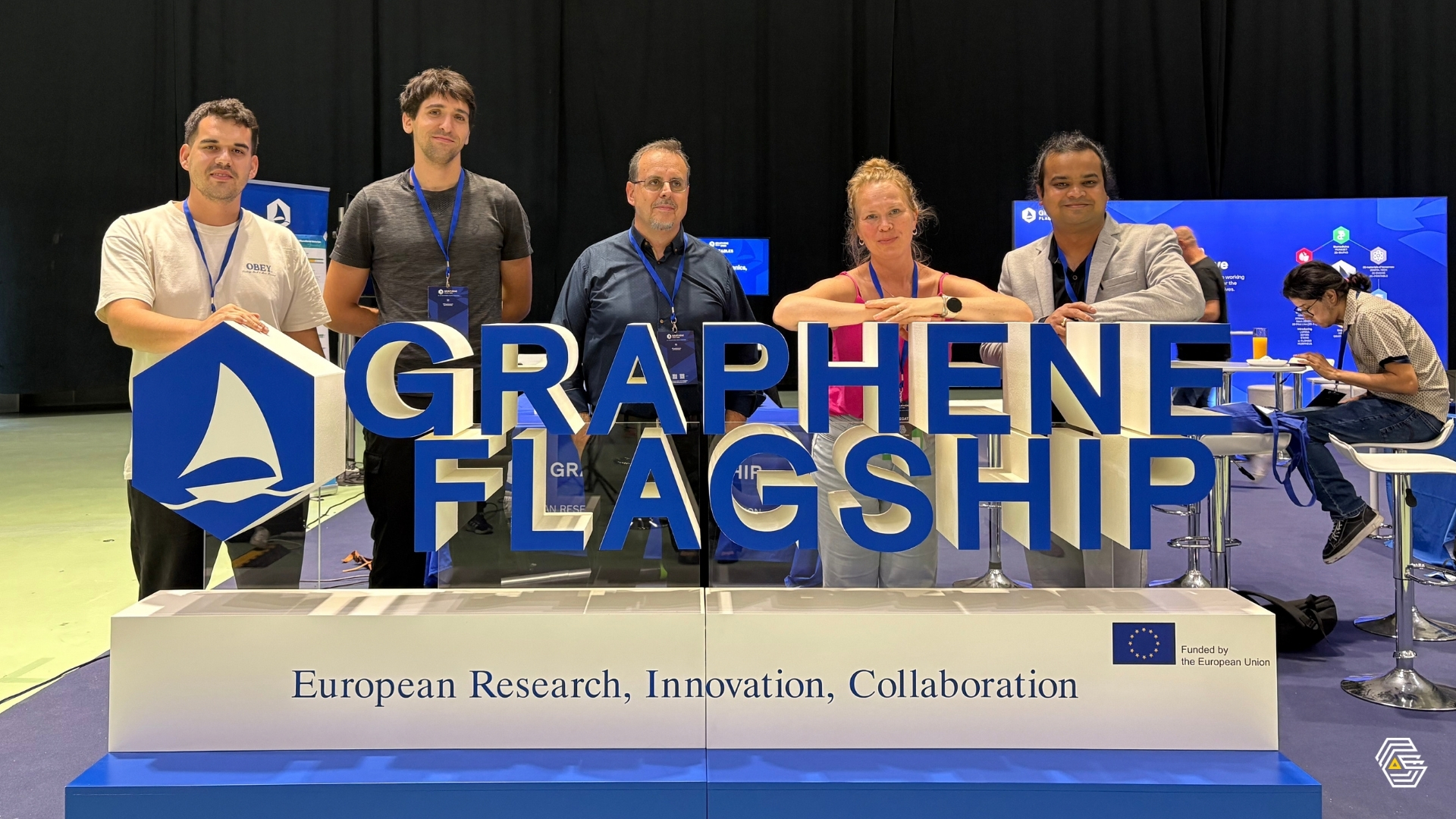
In words of Spyros Yannopoulos, Professor of Physical Chemistry at the University of Patras, collaborating Research Director at FORTH/ICE-HT, and GRAPHERGIA Coordinator:
“I was very pleased to see the project so strongly represented at Graphene Week 2026 in Porto. Our joint workshop with ARMS provided an excellent opportunity to connect advances in scalable graphene processing with applications in smart textiles, energy harvesting and storage, while Professor Sheng Dai’s invited lecture on ‘Unconventional Carbon Processing’ brought an important broader perspective on next-generation carbon materials. The posters presented by FORTH, Adamant Composites and Pleione Energy further demonstrated the breadth of GRAPHERGIA, from materials and processing to device integration and scale-up.” – Spyros Yannopoulos, GRAPHERGIA Coordinator.
Graphene for Smart Textiles, Wearable Electronics and Energy Harvesting and Storage
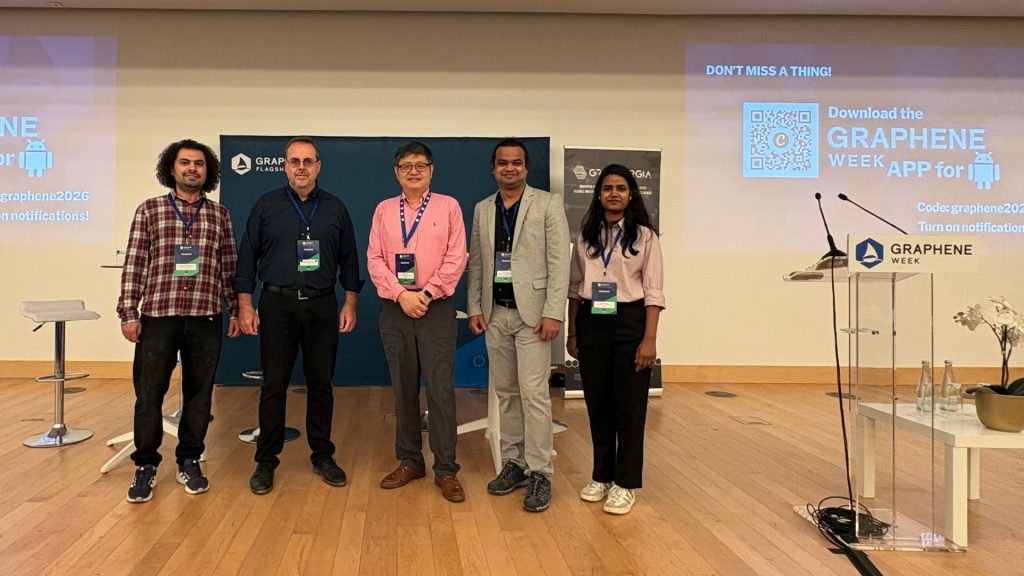
GRAPHERGIA’s central discussions focused on how our researchers are using graphene technologies for smart textiles and wearable electronics, with the ultimate goal of harvesting and storing energy.
Apurba Ray, Research Scientist at the German Aerospace Center (DLR), delivered the oral presentation ‘Robust Flexible Micro-Supercapacitors: Integrating High-Voltage Gel Polymer Electrolyte with Laser-Induced Graphene’ to an audience of more than 100 attendees during ‘Session 6. Flexible, Printed & Wearable Electronics’. These micro-supercapacitors harvest energy from human motion and ambient mechanical interactions to enable battery-less, on-demand charging for wearable sensors, a breakthrough that marks a major shift from bulky, standalone batteries to multi-functional, wearable energy reservoirs.
He also spoke about this topic during our workshop, co-organised with the ARMS project. On the afternoon of 24 September 2026, four researchers from both projects, together with invited speaker Sheng Dai, Professor of Chemistry in the Department of Chemistry at the University of Tennessee, Knoxville, gathered for the workshop ‘Scalable Graphene Technologies for Smart Textiles, Wearable Electronics and Next-Generation Supercapacitors’.
The session showcased how graphene and related materials are enabling energy-autonomous systems through the convergence of advanced materials, scalable manufacturing and application-driven device integration. It was chaired by Hamed Pourkheirollah, Postdoctoral Researcher and Project Manager at Tampere University (ARMS), and featured contributions from Spyros Yannopoulos (GRAPHERGIA), Apurba Ray (GRAPHERGIA) and Komal Gola, Researcher at Chalmers University of Technology (ARMS).
Two Poster Awards on Innovation and Sustainability
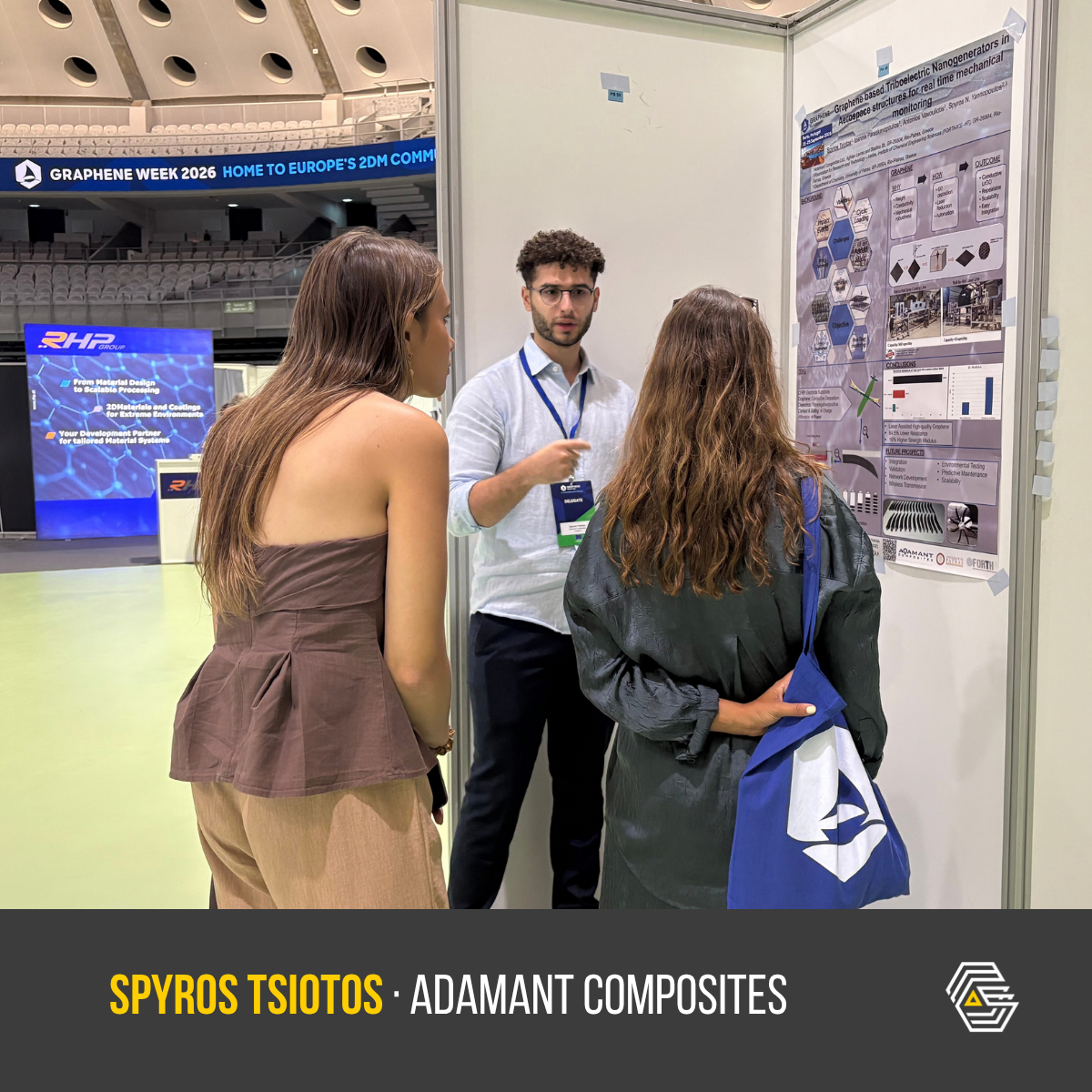
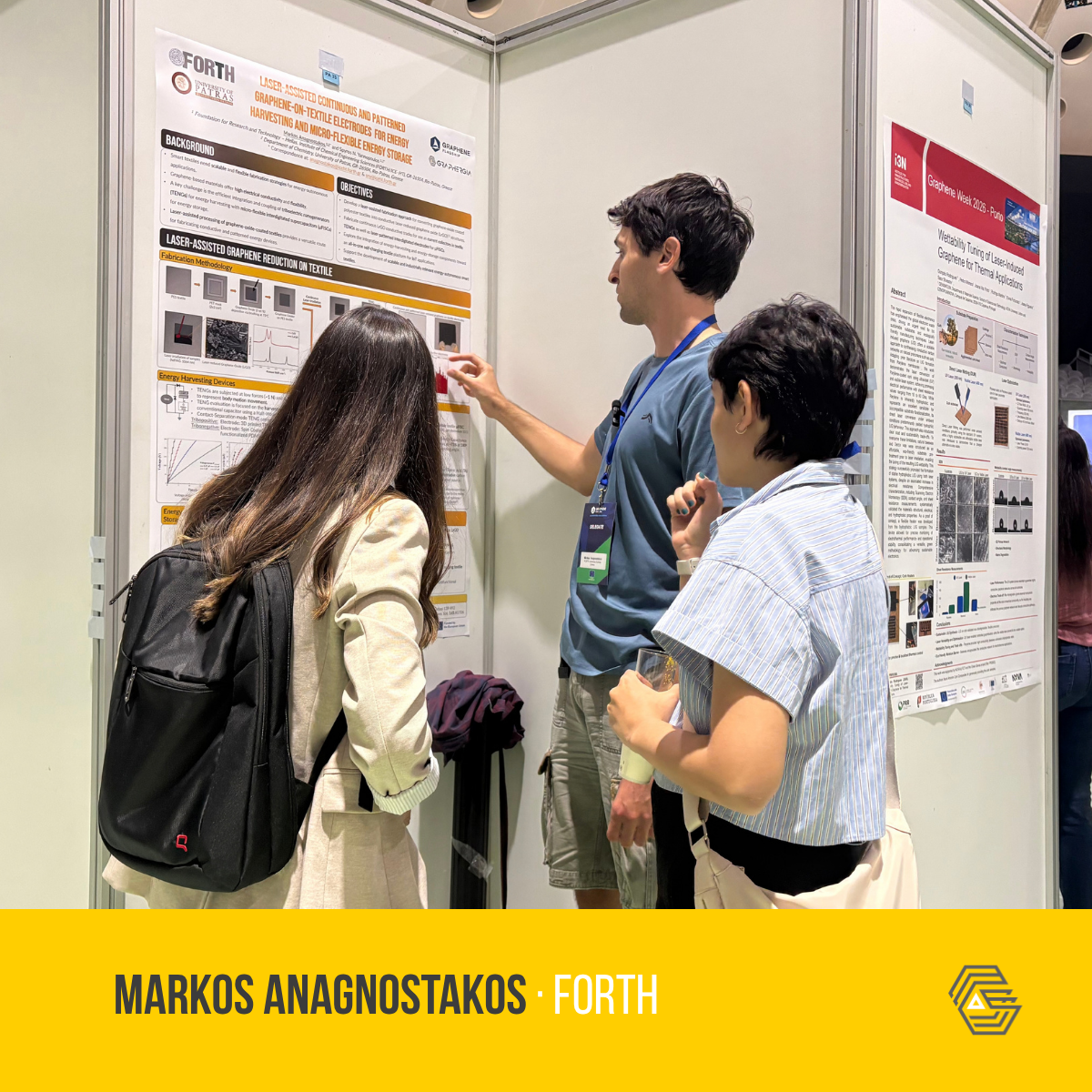
Spyros Tsiotos, Materials and Processes Engineer at Adamant Composites, and Markos Anagnostakos, Master’s student at the Institute of Chemical Engineering Sciences (FORTH/ICE-HT), returned home to Patras, Greece, with a poster award each.
Spyros Tsiotos showcased the poster ‘Graphene-based Triboelectric Nanogenerators in Aerospace Structures for Real Time Mechanical Monitoring’, in which he explores how graphene-based triboelectric nanogenerators (TENGs) can turn mechanical movement into electrical signals for real-time monitoring of aerospace composite structures.
“Winning first prize in ‘Manufacturing, Composites & Scale-Up’ at Graphene Week 2026 is a proud moment for our team, and receiving recognition from such a knowledgeable audience encourages us to keep advancing towards practical, scalable applications”, Tsiotos reflected.
Markos Anagnostakos’ poster was also recognised, receiving the award for ‘Best Poster on Sustainable Use of Graphene’. In his work ‘Laser-Assisted Continuous and Patterned Graphene-on-Textile Electrodes for Energy Harvesting and Micro-Flexible Energy Storage’, co-authored by Spyros Yannopoulos, he showcases GRAPHERGIA’s scalable strategy for integrating energy-harvesting and energy-storage functionalities directly into textile platforms for wearable and self-powered electronics.
“We are developing a laser-assisted route for converting graphene-oxide-coated polyester textiles into conductive graphene-based architectures that serve two complementary functions: continuous conductive tracks as current collectors/electrodes for triboelectric nanogenerators, and laser-patterned interdigitated electrodes for micro-flexible supercapacitors (mfSCs)”, explained Markos. He also added that a central challenge in GRAPHERGIA is the optimal coupling of energy-harvesting and energy-storage units to realise an all-in-one self-charging textile compatible with IoT integration.
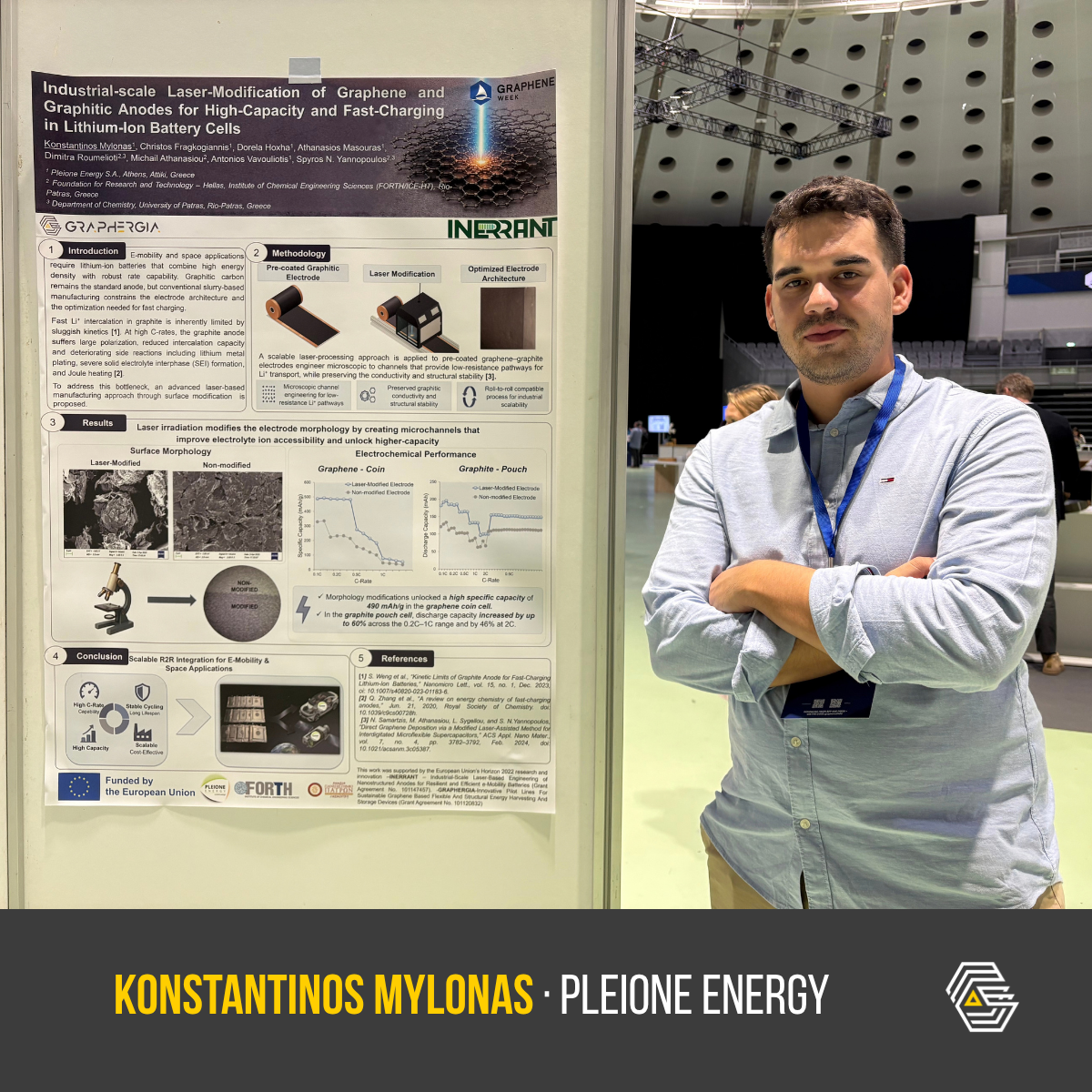
Konstantinos Mylonas, Junior Materials and Processing Engineer at Pleione Energy, presented the third GRAPHERGIA poster, ‘Industrial-Scale Laser-Modification of Graphene and Graphitic Anodes for High-Capacity and Fast-Charging in Lithium-ion Battery Cells’, focused on a scalable laser-processing method to engineer electrode surface unlocking fast charging.
From Space Energy Storage to Self-Charging Textiles
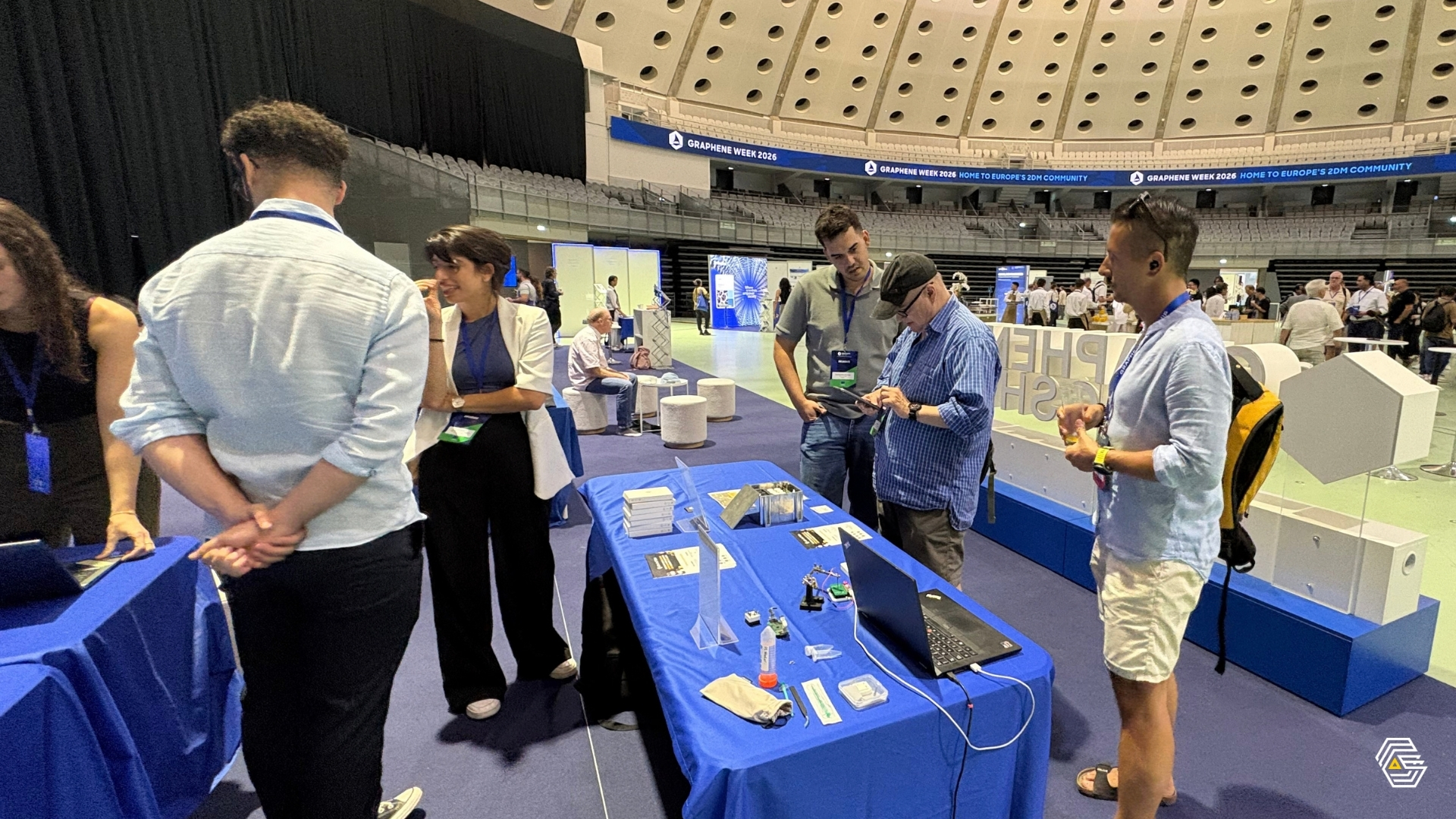
Whenever we were not attending a workshop or session, you could find us in the exhibition area, where we showcased a prototype of our Demo Case 3 ‘Advanced graphene-based LIB module prototype for space applications’.
Konstantinos Mylonas presented an advanced lithium-ion battery (LIB) module demonstrator for small-satellite and CubeSat applications, with the aim of integrating the graphene-based cells developed within GRAPHERGIA. The demonstrator highlighted the benefits of graphene-enabled and laser-assisted electrode technologies for space energy storage systems, including higher performance, longer cycle life and increased reliability compared to conventional battery technologies.
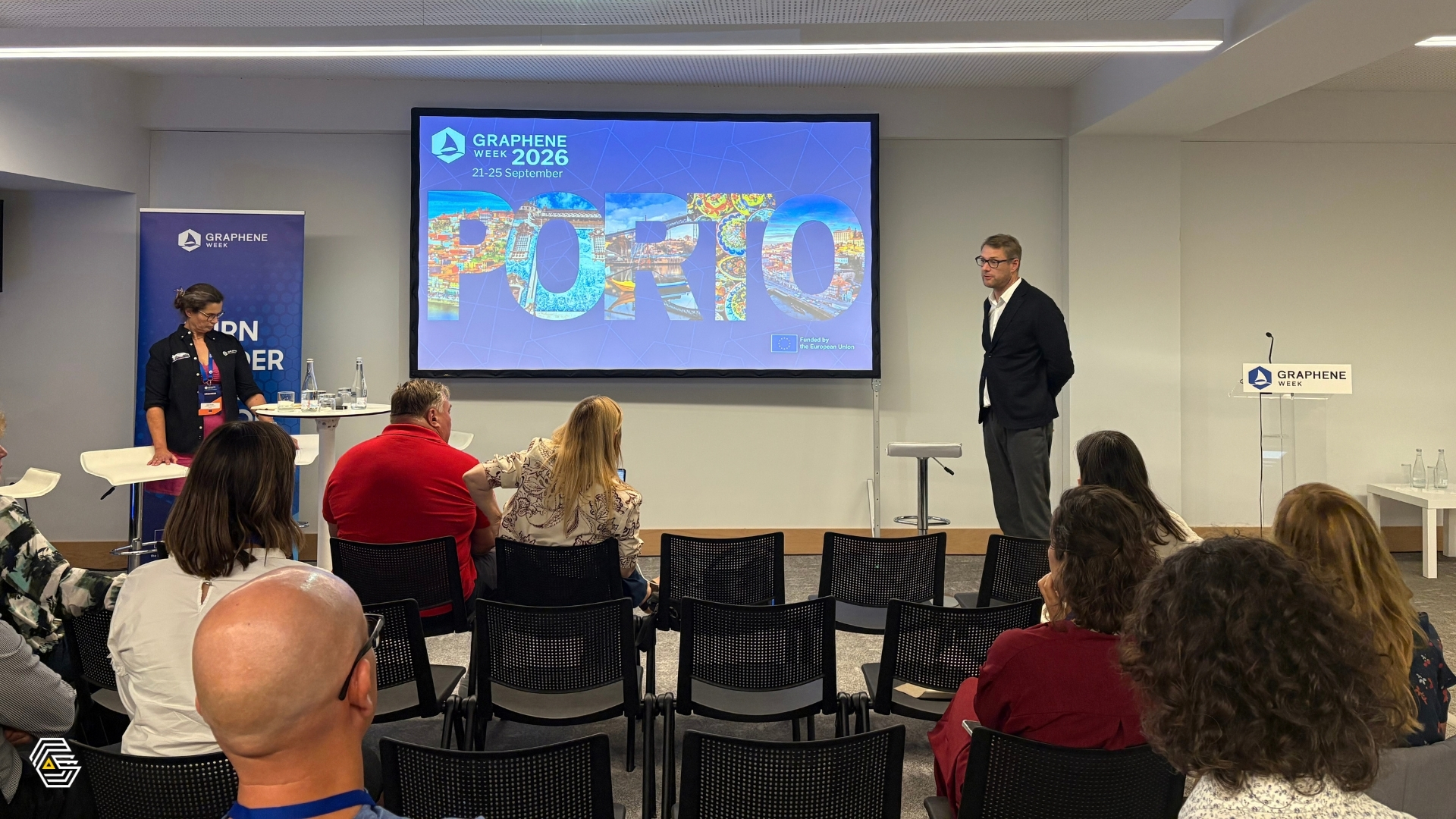
Michael Schneider, CEO of Born Knitting Engineers, also spoke about our Demo Case 1 ‘All-in-one self-charging textile capable of energy harvesting and storage’, during the Innovation Forum’s commercialisation pitches on 23 September. He explained GRAPHERGIA’s textile-based TENG technology for self-powered sensors and energy harvesting, targeting applications in health and well-being, sports, defence and IoT-connected environments.
Thank you once again, Graphene Flagship, for making Graphene Week 2026 possible!