

GRAPHERGIA focuses on laser-assisted graphene deposition to develop greener energy-harvesting and storage solutions. Its innovation is demonstrated through e-textiles for wellness monitoring, smart sensors for aerospace, and Li-ion batteries for spatial applications. In consequence, our 3,5 year research and innovation project launched in October 2023 is ambitious, and insights from target stakeholders dealing with the related research areas are crucial for obtaining results that are useful, relevant and efficient for the targeted sectors.
GRAPHERGIA’s Mission: Addressing Specific Challenges in Energy Efficiency
Over two years ago, GRAPHERGIA’s multidisciplinary research team started their joint journey to tackle the need for seamless, resistant and lightweight energy solutions that can be self-powered, reducing the necessity of charging or battery change. In the framework of our research, the consortium taps into three key areas where novel energy solutions are welcome:
- Self-powered smart clothing that uses sensors and the Internet of Things (IoT) to collect real-time data on its user can be deployed across applications, including sports tracking, wellness monitoring, connected health, and even military clothing.
- Spatial activities, especially the launch of satellites, which are driving demand for resistant, self-powered batteries that endure harsh conditions. Thanks to its exceptional mechanical strength, electrical conductivity, and chemical stability, graphene offers new opportunities to enhance battery performance, improve durability, and reduce environmental impacts throughout the battery lifecycle. GRAPHERGIA develops and pilots the optimal laser-scribed graphene-based electrodes and LIB cells.
- The aviation sector uses various sensors to support aircraft structural health monitoring and improve maintenance processes. GRAPHEGRIA designs a sensor that measures both temperature and strain. It is designed to be structurally integrated, meaning it can be embedded directly into aviation structures such as wings or fuselage, and to harvest its own energy using a miniaturised triboelectric nanogenerator and supercapacitors.
Across these three application areas, GRAPHERGIA brings together laser-assisted graphene synthesis on flexible substrates with advanced interconnects for flexible electronics, delivering a new generation of structurally integrated energy storage devices. We aim to move from experimental proof of concepts to technologies validated in relevant environments.
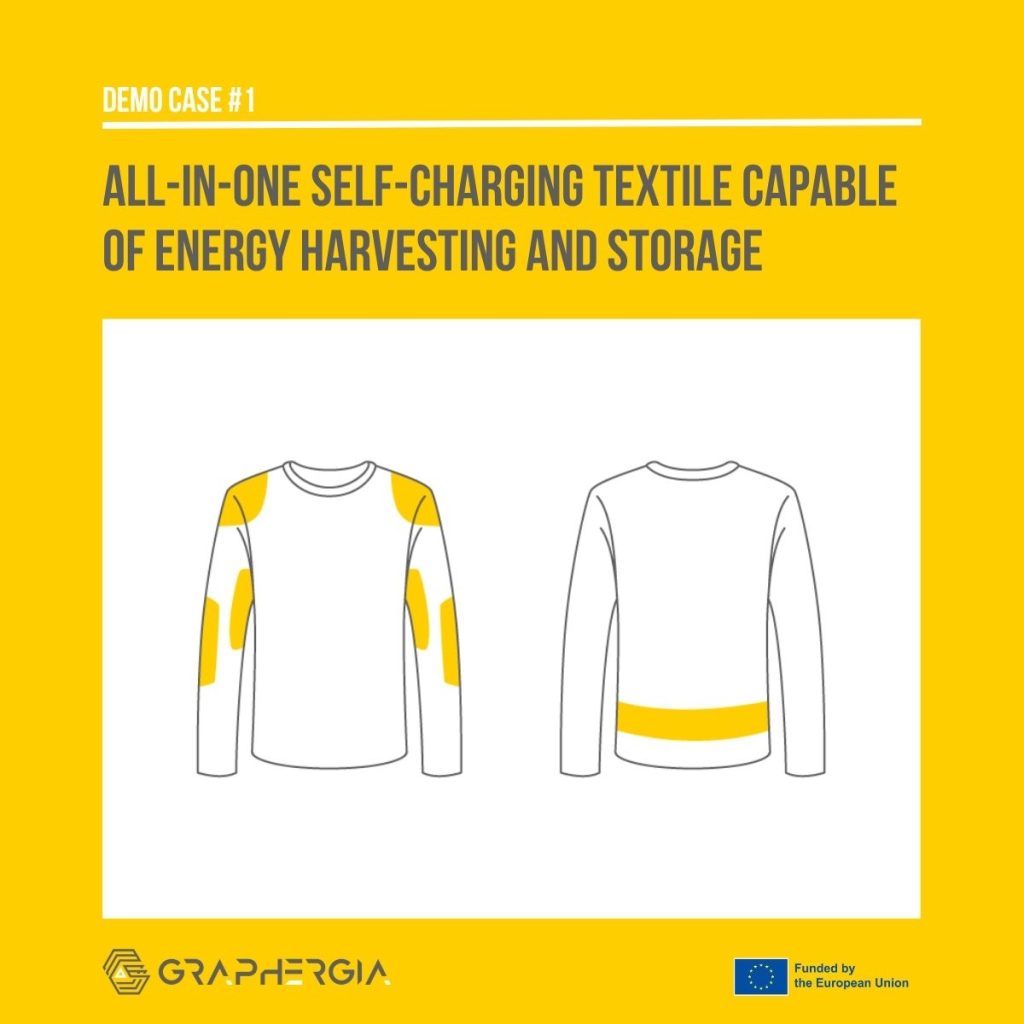
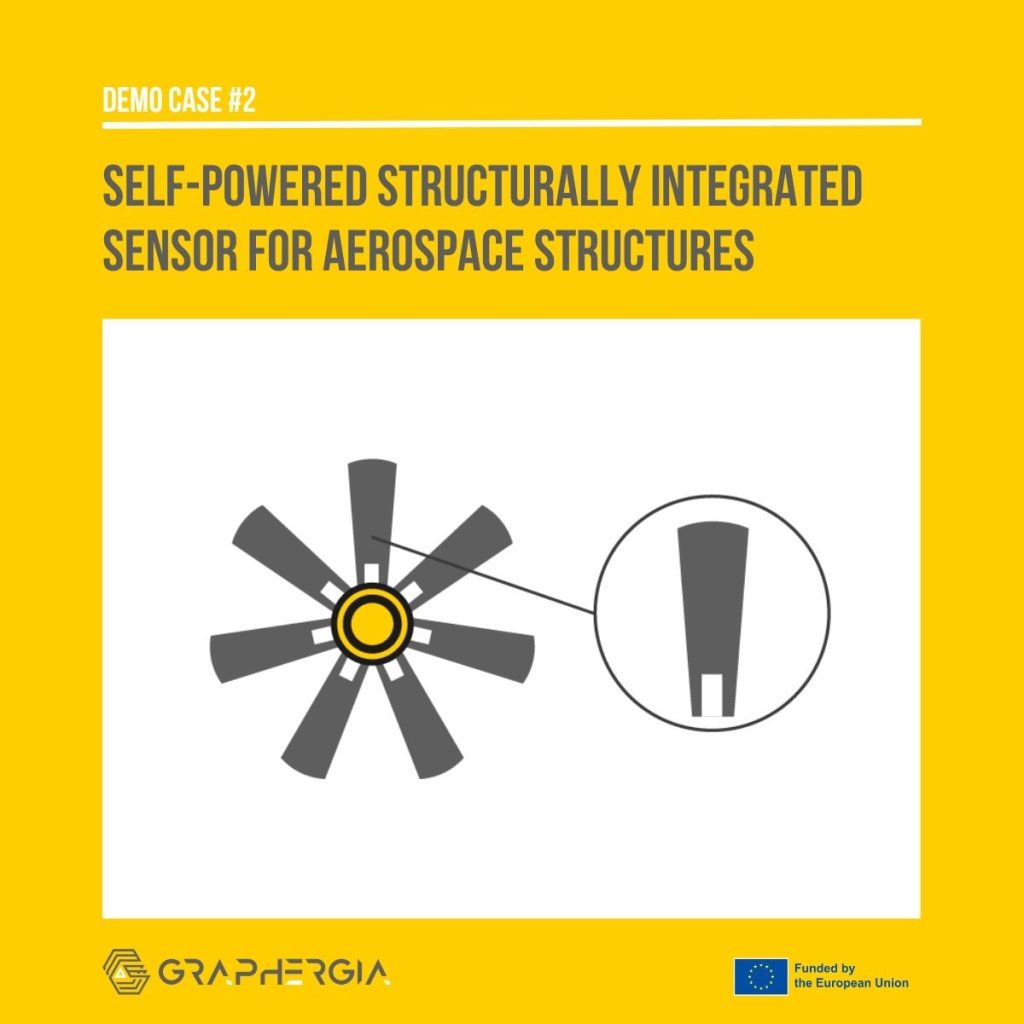
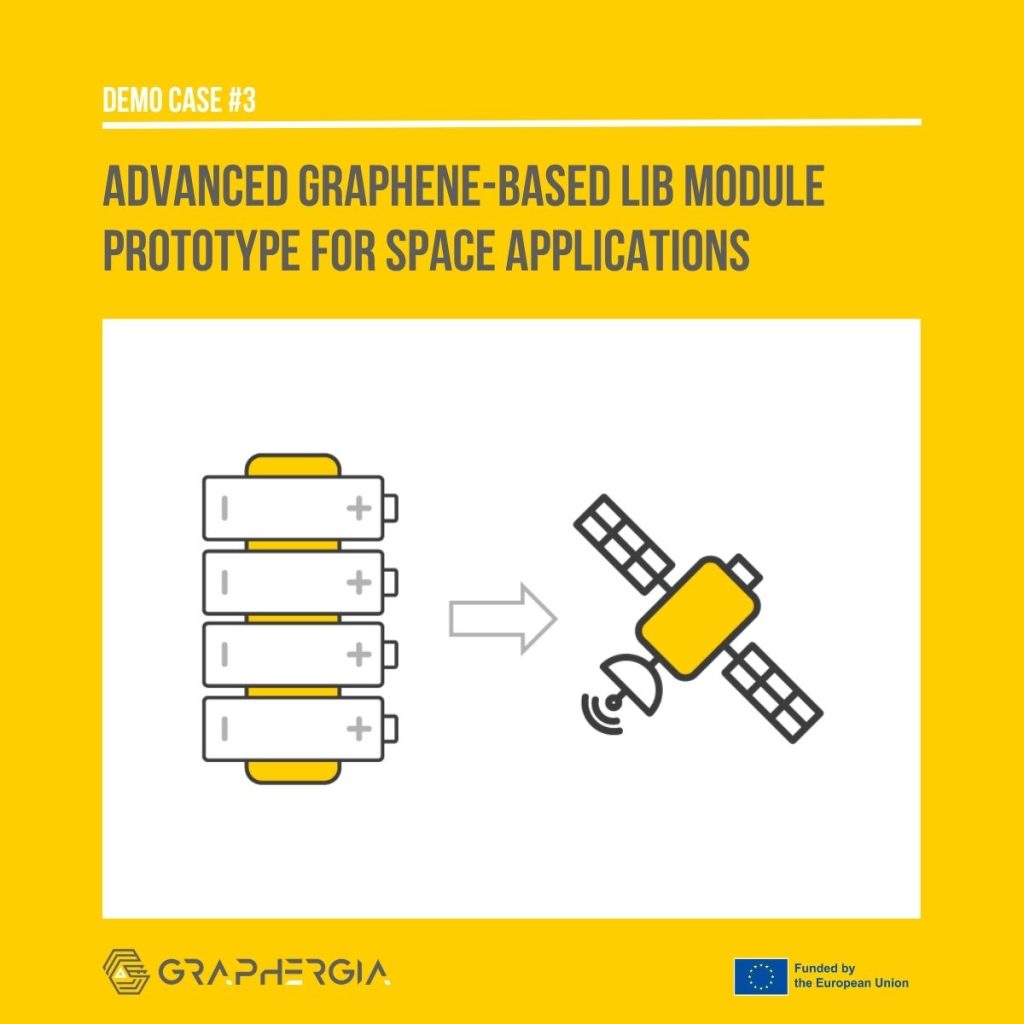
GRAPHERGIA’s Innovations Benefit Target Users From the Energy, Smart Textiles and Batteries Sectors
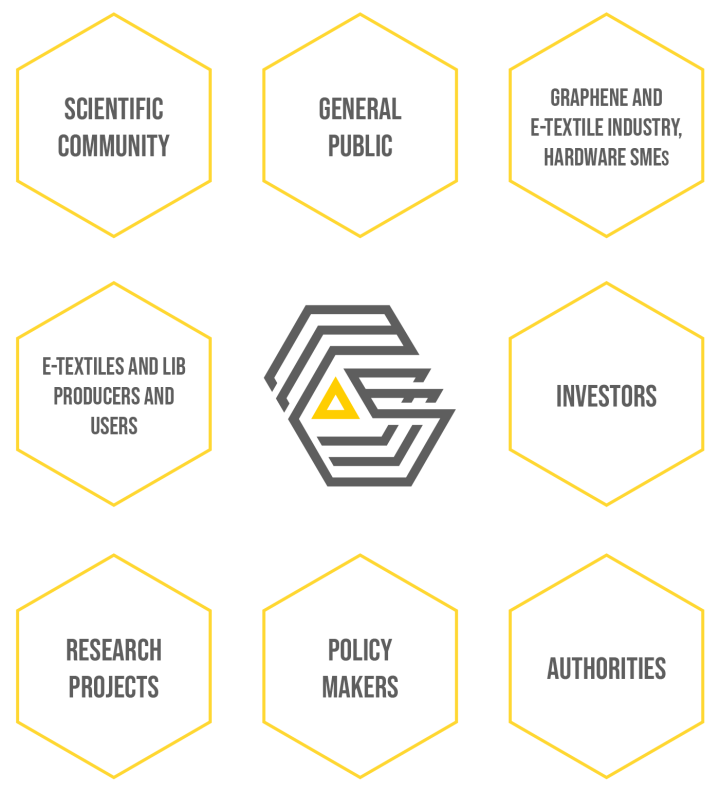
When there is a specific need, there are real users behind it, seeking novel solutions to address it. In the case of GRAPHERGIA, we have identified an initial cohort of target stakeholders who would directly benefit from the project’s innovation results. They are specific user groups and stakeholders who either work in energy solutions development or deployment, such as professionals from the advanced materials and e-textile industries, SMEs fabricating hardware, as well as both producers and users of smart textiles and Li-Ion batteries.
At the midpoint of our research and innovation project, we launched a continuous dialogue with a group of experts representing the target stakeholders to obtain direct feedback from the target sectors: the GRAPHERGIA Advisory Board.
The Advisory Board Supporting the further Industrialisation of GRAPHERGIA’s Results
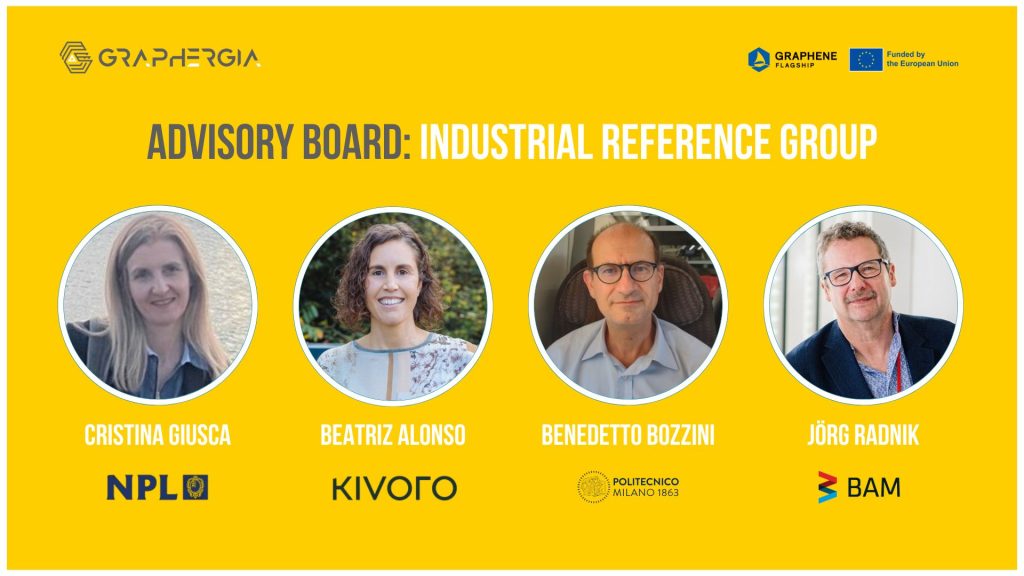
With the core solution and its target users in mind, the GRAPHEGIA team has established an advisory board, the ‘Industrial Reference Group’, to monitor the project’s innovation journey and provide direct feedback that reflects the needs and current state of the target markets and related application areas.
This group comprises four supporting experts:
- Cristina Giusca, Principal Scientist at National Physical Laboratory (UK).
- Beatriz Alonso, Research & Development (R&D) Manager at Kivoro (Spain).
- Benedetto Bozzini, Full Professor at Politecnico di Milano (Italy).
- Jörg Radnik, Senior Scientist at the Federal Institute for Material Research and Testing, Berlin, and the Competence Centre Nano@BAMs (Germany). He is also the Leader of the Standardisation and Regulation task in the Graphene Flagship.
During the initial meeting with the group in November 2025, the GRAPHERGIA partners gathered valuable insights, particularly regarding the value added and the feasibility of the project’s ambition. Among the most immediate applications, the advisors identified conductive textiles and lithium-ion battery anode foils as particularly promising. They recommended that manufacturers of smart textiles, battery cells, and supercapacitors be engaged at an early stage to assess market suitability, manufacturability, and compliance with regulatory requirements.
Moreover, Cristina, Beatriz, Benedetto and Jörg highlighted that identifying the Key Exploitable Results (KERs) in an EU-funded research and innovation project can be challenging, as these results are the fruit of the consortium’s collaboration. GRAPHERGIA’s eight KERs were discussed and presented, along with related demo cases. The board agreed that the process is on track and that the next crucial step is to manage intellectual property rights.
The advisory board continues to regularly monitor research progress in GRAPHERGIA, and it will be expanded to include additional industry representatives as the demo cases kick off in March 2026.
Travelling the new seas of innovation is always better when one is well accompanied!