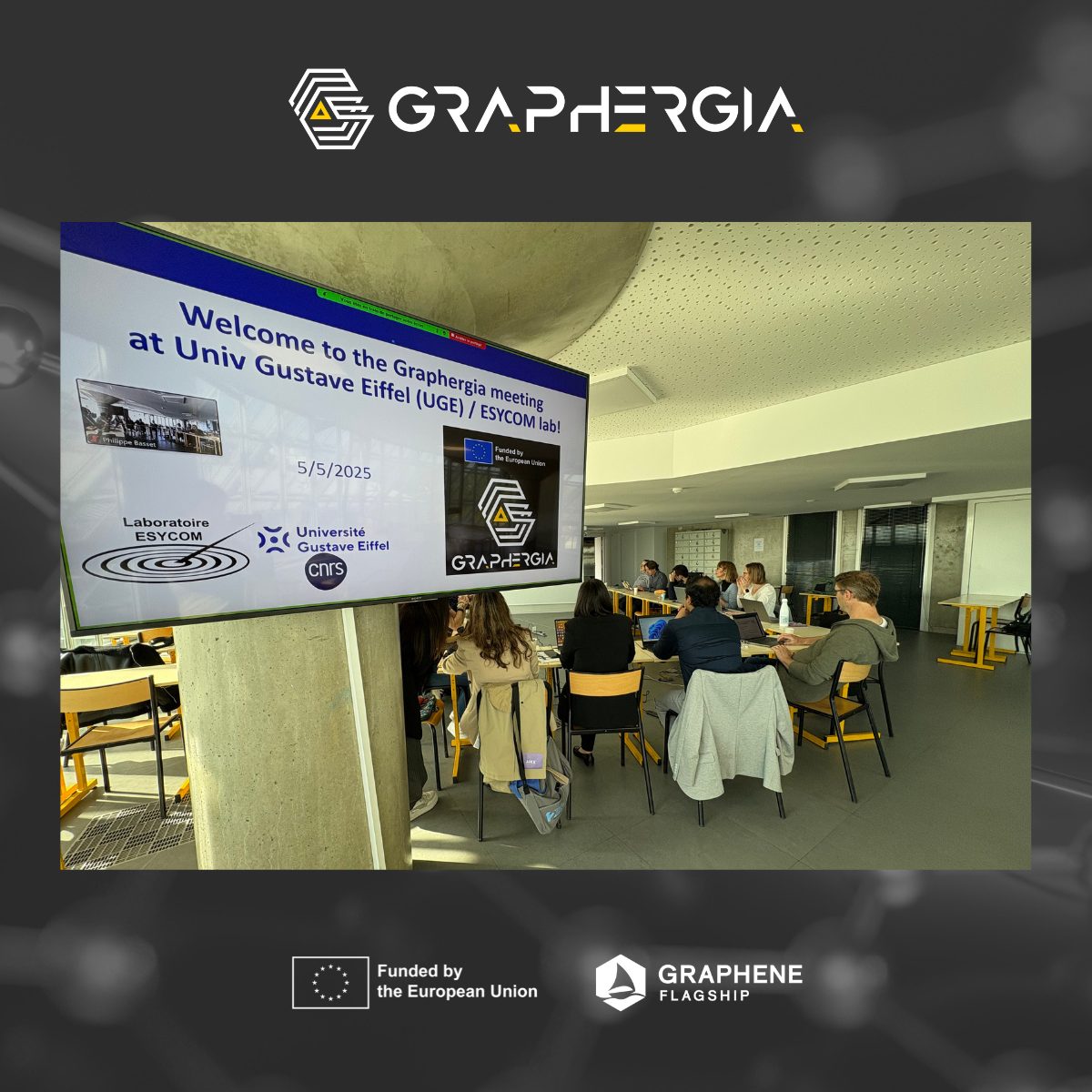
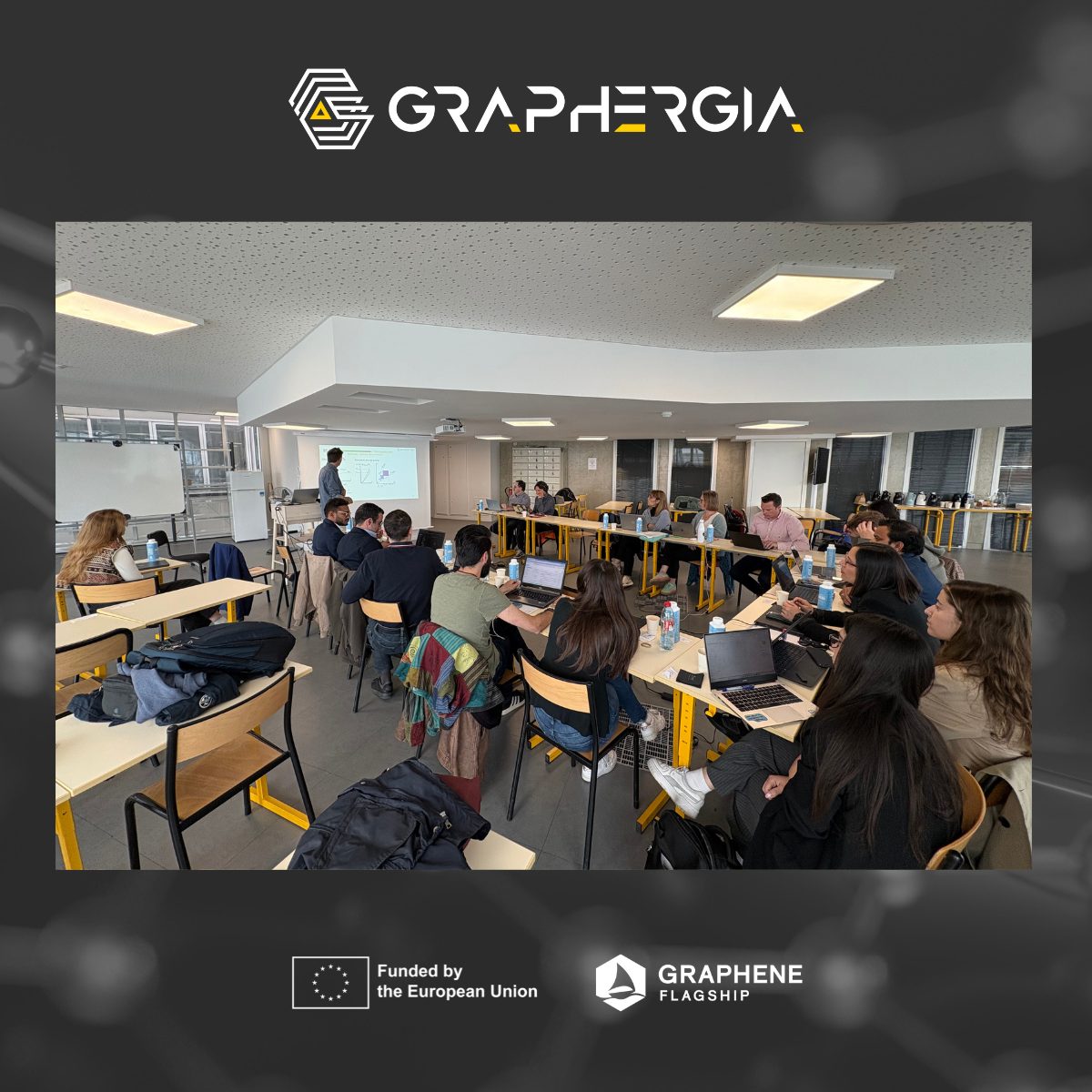
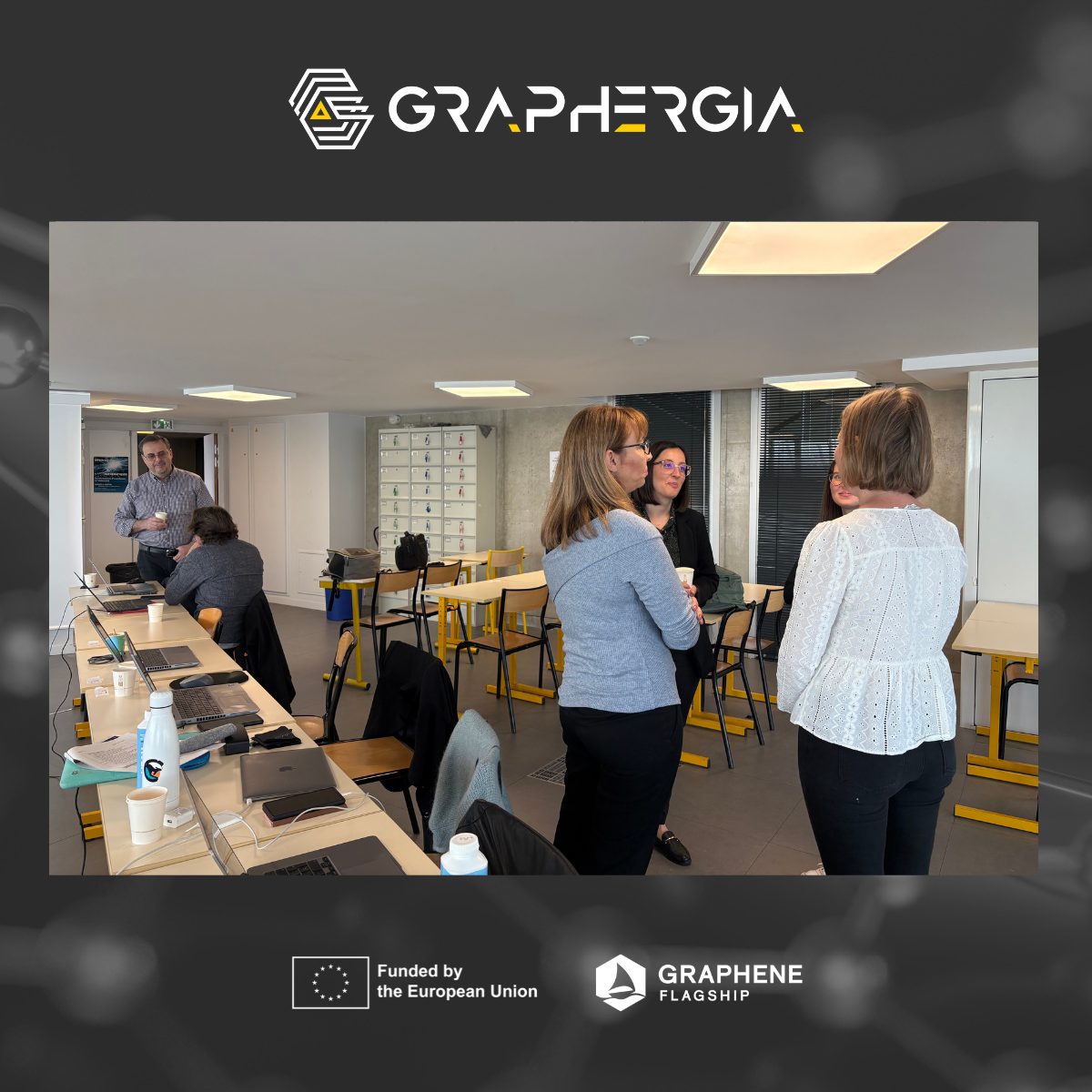
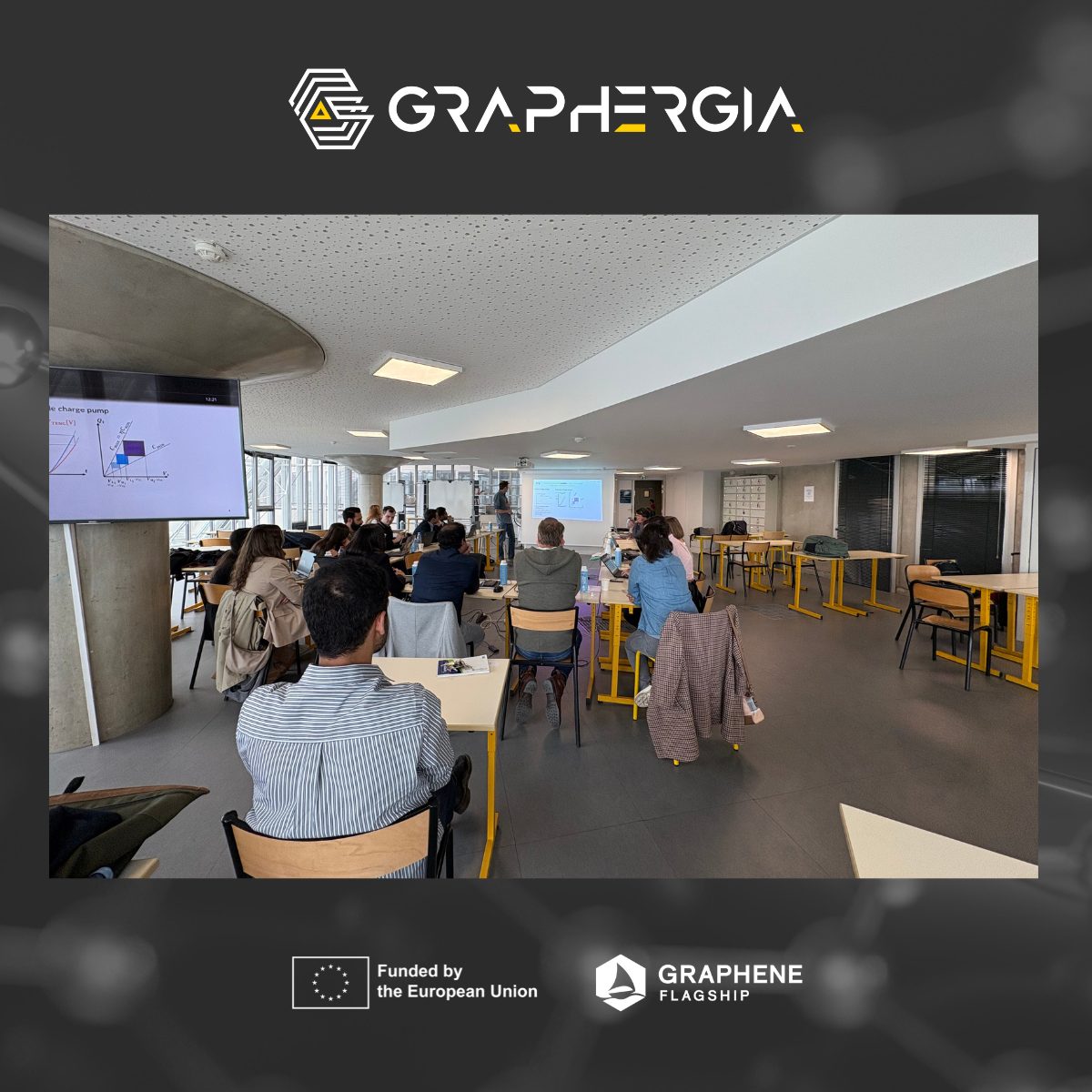
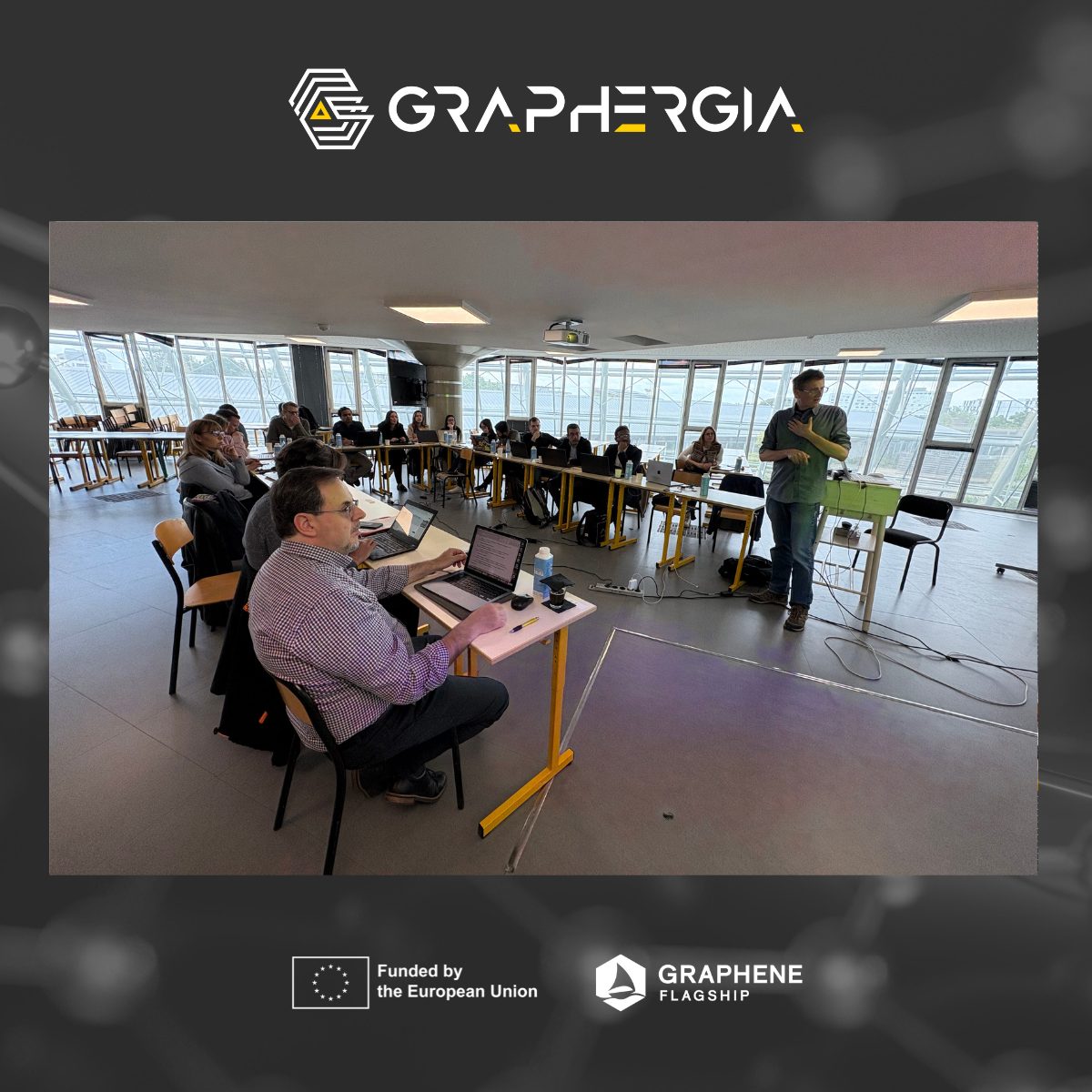
After kicking-off the project in Patras (Greece) and gathering in Prato (Italy), the GRAPHERGIA partners met in person for the third time in a general assembly in Paris (France), in a meeting organized by Philippe Basset, Professor at ESIEE Paris, the Engineering School of the Université Gustave Eiffel, and Director of ESYCOM, a laboratory dedicated to sensors and communicating systems.
The assembly, celebrated on the 5th and 6th of May 2025, focused on reviewing the status of all our work packages and their tasks to make sure we are all aligned to unlock the potential of laser-assisted graphene production to shape the future of smart, self-charging textiles and next-generation Li-ion batteries, considering that the GRAPHERGIA project mid-term review of the month 18 (March 2025) out of 42 (March 2027) will take place on the 12th of June. Discussions about our participation in the upcoming Graphene Week 2025 (22-26 September, Vicenza, Italy) also had a space in the agenda.
The GRAPHERGIA Meeting in Paris Highlights
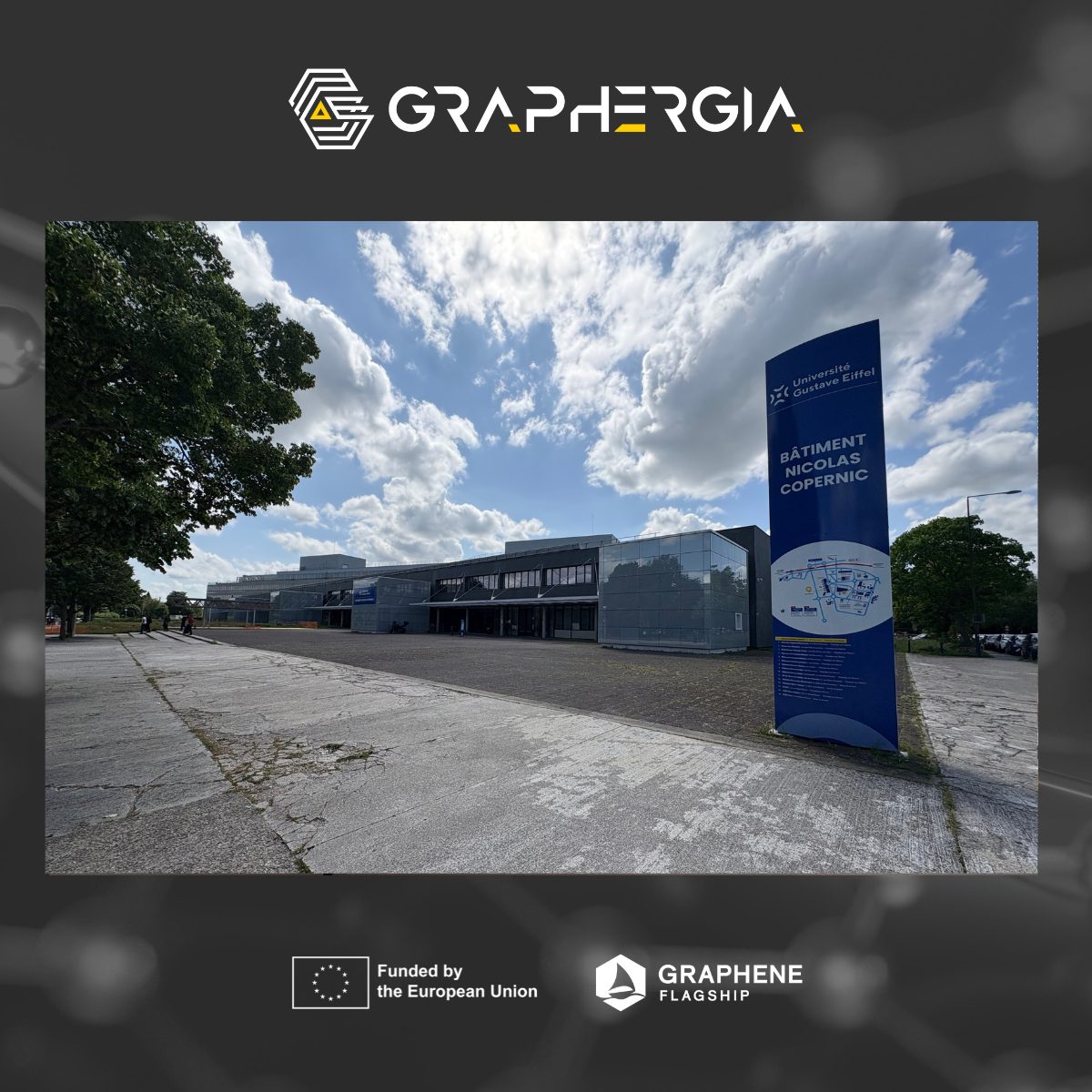
During a day and a half, we gathered in the Copernic Building in the university campus located in the outskirts of the French capital, specialized in transport and urbanism, and also health monitoring.
We met because after 20 months since the launch of GRAPHERGIA, the momentum is strong: from laser-optimized graphene production to integrating energy storage components into textiles, we are working together to push the boundaries of smart materials and sustainable energy technologies, while also developing the next-generation electrodes for Li-ion batteries utilized in a variety of space systems, including satellites, launch systems and rovers.
Our partners shared how they are working on the implementation of the laser optimization in different graphene mass loadings, while verifying the graphene quality on the polyester textiles; or how they are integrating micro super-capacitors fabricated using PI electrodes and polymer electrodes to produce high voltage polymer electrolytes with eco-design methodologies.
Right after finishing our meeting, we were invited to have a tour in the ESYCOM Lab, where Philippe Basset and his team work, for a better understanding of their technical and research activities. This laboratory has recognized expertise in the areas of engineering for communication systems, sensors and microsystems, skills which are combined in projects undertaken at the laboratory dedicated to communications systems and sensors for cities, the environment and humans, such as GRAPHERGIA.
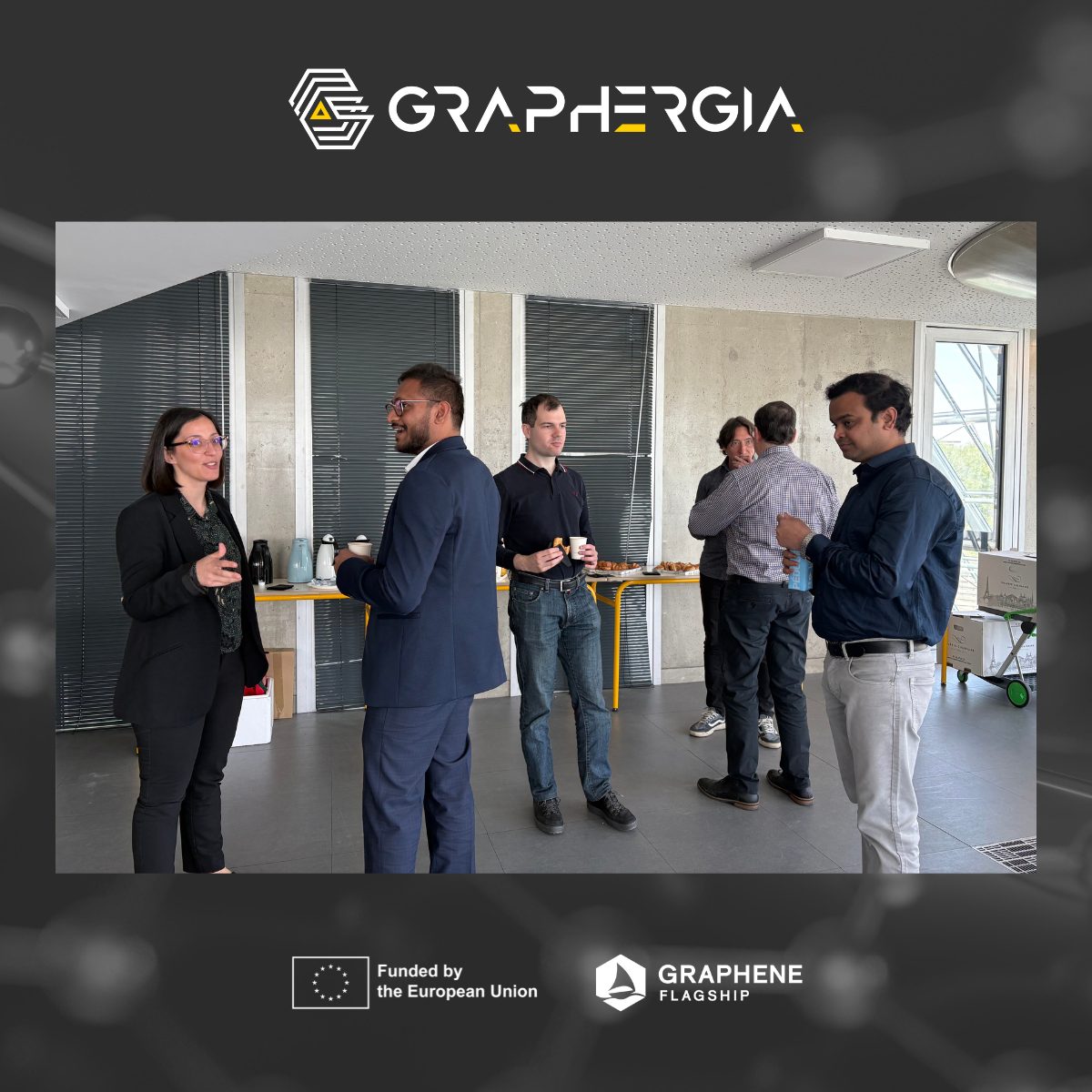
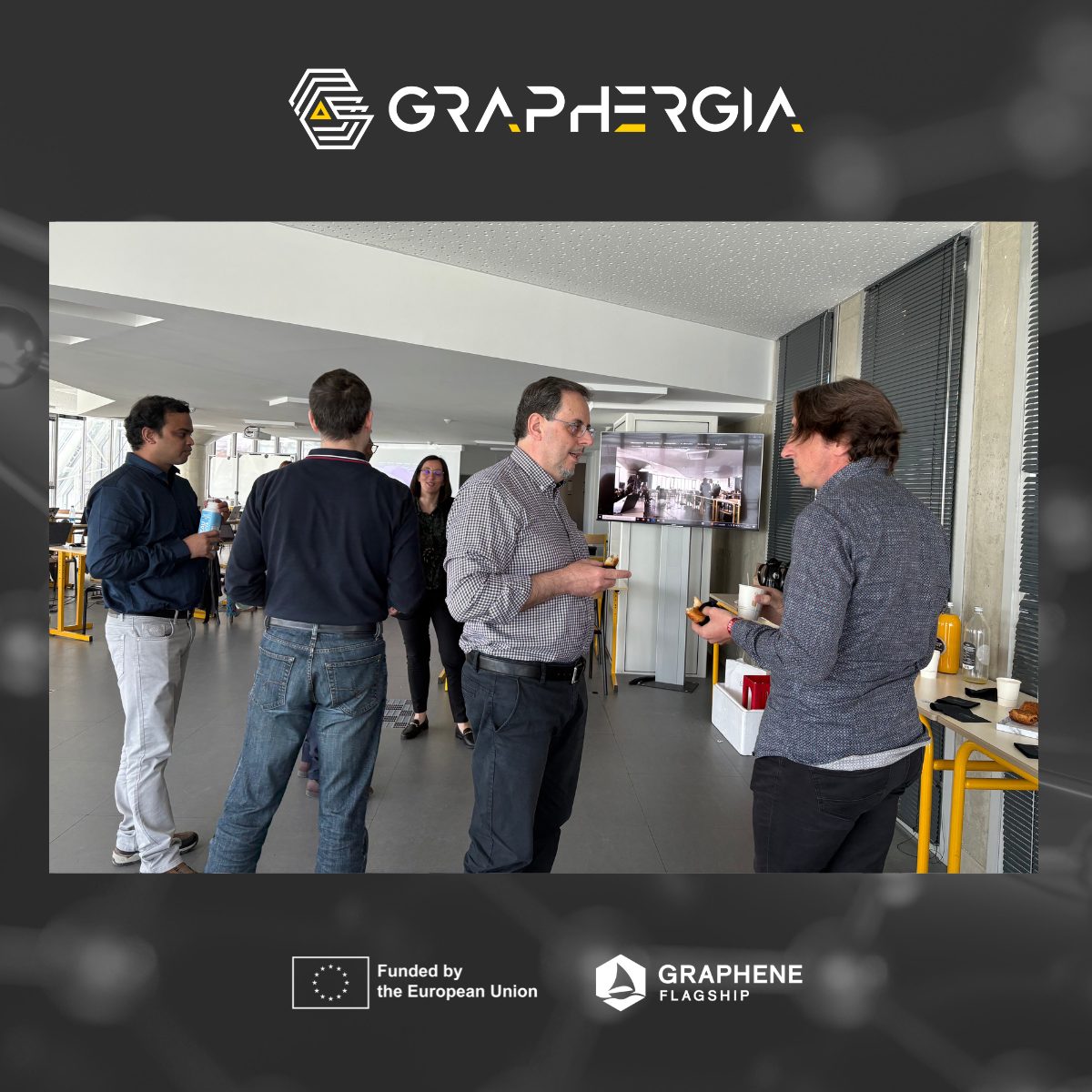
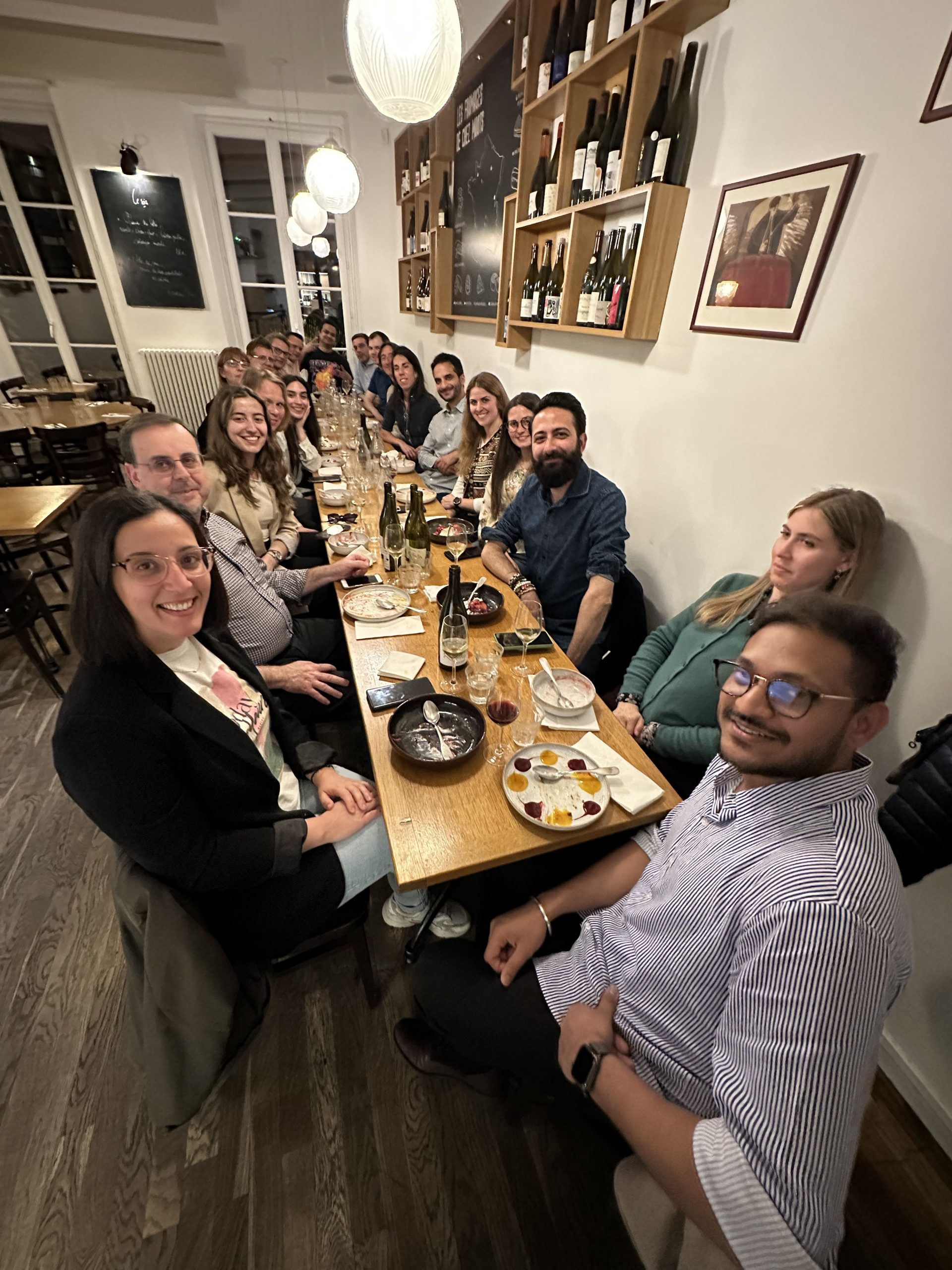
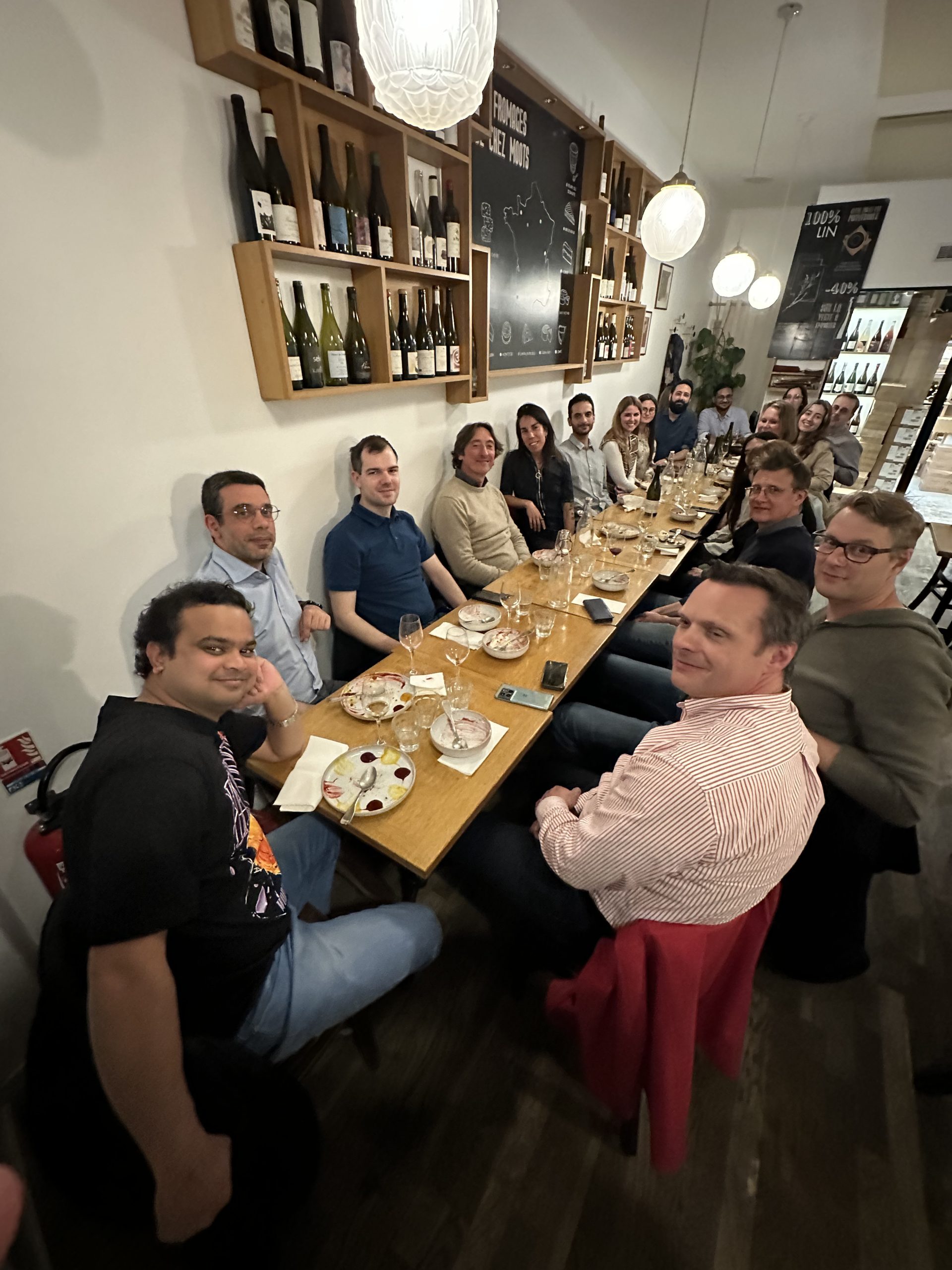
Later in the evening, we enjoyed a team building dinner in the heart of Paris, and spoke about graphene, 2D materials and energy in a more social context, sharing good food and getting to know each other’s background and research.
The next morning, we had to focus on the preparation of the GRAPHERGIA mid-term review meeting, and we exchanged our ideas about it, planning the structure and the content that we will present. Moreover, our partner Next Technology Tecnotessile gave a session about the sustainability aspects of GRAPHERGIA and the different methodologies we are using, such as Life Cycle Assessment (LCA), Life Cycle Cost (LCC) and Social Life Cycle Assessment (SLCA); and AUSTRALO led a brainstorming session to plan the content calendar for the upcoming months.
These regular meetings in person gathering the whole GRAPHERGIA consortium are a key moment for all partners to align on progress, share insights, and drive innovation forward. This is why our next general assembly will be organized by Tullio Scopigno, Full Professor at the Physics Department of Sapienza Universitá di Roma, in the Italian capital.